
Aegaea

Quick links

↑ ↓ to choose · Enter to open · Esc to closeSearch stays in your browser.

Minor Development

The expert flood team at Aegaea can support your minor development planning application with an in-depth look at your project's flood risk against the local and national policy requirements. You'll need a FRA if your development is within Flood Zone 2, 3 or in a Critical Drainage Area.

What is a Minor Development and does it require a Flood Risk Assessment?

In England, there are different definitions of Minor Development. The definition depends on the type of development you are proposing, as the guidance you are referring to provides a different set of criteria, guidance, and policy to be adhered to.

The approach applied to each development depends on environmental conditions, flood zones, the type of development, and local policy. This is why it’s important to work with a specialist. You must ensure you have the right Flood Risk Assessment specific to your development.

Why is it important to produce a Flood Risk Assessment for a minor development?

Although ‘minor’, there is a risk that if an unregulated development were to occur in a Flood Zone, the new construction - be it a solid building, wall, or even fence - could disrupt the natural flow path of floodwater and, in turn, increase the risk of flooding elsewhere.

Further minor developments could impede access to flood defence and management facilities. Minor developments also have a cumulative impact. To provide an example, if each residential property on a street in a flood zone constructed an extension of 20m2, the cumulative impact on displacement could be huge. This is especially true if appropriate mitigation measures have not been incorporated. Areas that previously did not flood could now become susceptible, and those areas that did could experience far greater flood levels.

If you are proposing a minor development and are unsure if you require a flood risk assessment or which flood zone you are located in, use the form below to contact our team.

More About Minor Developments

We’ve included an FAQ section below to summarise what you need to understand about your minor development flood risk assessment. If you have any questions not answered here, contact us on info@aegaea.com.

If the minor development is located in Flood Zone 2 or 3 or a Critical Drainage Area, you may still require a Flood Risk Assessment.

Flood Risk – Planning Practice Guidance - Minor Development

In England, a flood risk assessment is required when any development, regardless of size, is proposed in Flood Zone 2 or 3 or in a critical drainage area.

The Government’s guidance on flood risk defines a ‘minor development’ as:

  • Minor non-residential extensions: industrial/commercial/leisure etc, extensions with a footprint less than 250 square metres.
  • Alterations: development that does not increase the size of buildings e.g. alterations to external appearance.
  • Householder development (residential): For example; sheds, garages, games rooms, etc within the curtilage of the existing dwelling, in addition to physical extensions to the existing dwelling itself.

This definition excludes any proposed development that would create a separate dwelling within the curtilage of the existing dwelling, e.g. subdivision of houses into flats or granny annexe.

Should your development meet this criterion, the requirements to achieve planning in a flood zone become more complex and stringent and falls into the national planning guidance/town and country planning definition of minor development. This is discussed in greater detail below.

National Planning Guidance / Town and Country Planning Act - Minor Development

Following National Planning Guidance, not specific to Flood Risk, Minor Development is classified differently. Minor Development is viewed as;

  • Commercial developments of less than 1,000 square metres or less than 1ha site area
  • Changes of use of buildings of less than 1,000 square metres or less than 1ha site area
  • Residential development of 1 to 9 dwellings or a site area less than 0.5ha
  • Traveller sites of less than 1,000 square metres or less than 1ha site area
  • Telecommunications equipment proposals
  • Mineral or waste proposals of less than 1,000 square metres or less than 1ha site area

Should you have a project that falls into either definition, our team of experts can advise, consult, and guide you through what will be expected to meet the planning requirements.
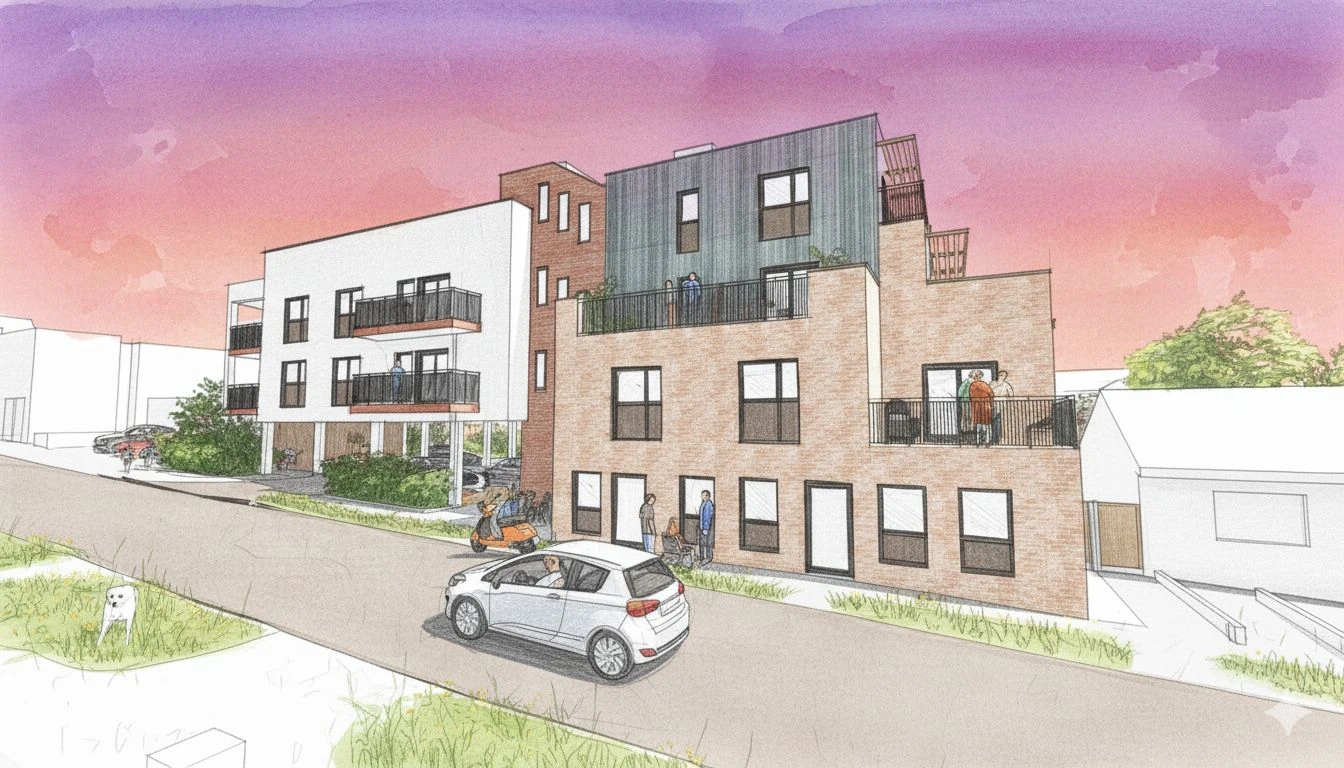

From our projects

See our work in practice

A project from our water team.

Managing Complex Surface Water Flood Risk at the Dew Drop Inn Redevelopment

Read the case study

Common questions

Here are answers to common questions about this work. If you would like to discuss your own site, we can help you work out what is needed.

In England, a FRA is required when the development or site is located in Flood Zone 2 and 3 according to the Environment Agency flood map for planning. An FRA is also required if the Site is in Flood Zone 1 when it is equal to or greater than 1 hectare in size or if it’s located within a Critical Drainage Area, regardless of its size.

Even with this in mind, the National Planning Policy Framework requires an FRA to be used to assess all sources of flooding. Therefore, an FRA could be requested even if your site doesn’t fit these requirements. Especially if there is a history of flooding, such as from a sewer or reservoir.

If your site is within 20 meters of an Environment Agency (EA) Main River, it’s also highly likely you’ll be required to provide an FRA with a particular focus on the EA Guidance.

Use the Environment Agency’s Flood Map for Planning, which is free to access. You define your site boundary and it returns the flood zone classification, along with surface water and climate change data. In Scotland, use SEPA’s flood maps; in Wales, the Flood Map for Planning published by Natural Resources Wales.

On the EA map, light blue shading is Flood Zone 2 and dark blue is Flood Zone 3. Either means your site is at risk of flooding and a Flood Risk Assessment will be required. An application submitted without one will likely be rejected, so it is worth checking at the idea stage rather than after the design is fixed. Finding out late can mean costly changes, from raising floor levels to relocating buildings on the site.

Bear in mind the maps show risk from rivers and the sea. They do not show Flood Zone 3b, and they will not tell you about groundwater or sewer flooding, so a clear result does not always mean no assessment is needed. Plenty of sites outside Flood Zones 2 and 3 still require an FRA.

Being in a flood zone does not end your development plans. Our team has supported many complex projects, including large developments in Flood Zone 3b, the highest risk classification in the English planning system. If you are unsure which flood zone your site falls in, or whether the project is viable, get in touch.

Flood zones classify land by the annual probability of river and sea flooding. They are defined in Annex F, table 1 of the NPPF and mapped by the Environment Agency on the Flood Map for Planning. Flood Zone 1 is less than 0.1%. Flood Zone 2 is between 1% and 0.1% from rivers, or 0.5% and 0.1% from the sea. Flood Zone 3a is 1% or more from rivers, or 0.5% or more from the sea. Flood Zone 3b, the functional floodplain, is where water has to flow or be stored in floods, identified by the council in its strategic flood risk assessment.

There are a lot of different parameters that can influence the time it takes to complete an FRA. Each project is unique and has different flood risks, designs, environmental conditions, topography, historic uses, and are subject to different planning policies. All of these can affect the time it takes for a flood risk assessment to be completed. The industry standard for an FRA is around 4 to 6 weeks.

Our team, however, have experience in supporting over 4,100 projects and have developed methods and techniques to analyse data efficiently and effectively review every aspect in a timely manner. On average, our FRA reports take 5 to 10 working days once we have received the necessary data.

In very limited cases, it may be possible for simple, low-risk developments such as small extensions. However, most planning applications require a professional consultant to ensure the assessment is accurate, proportionate, and meets planning policy requirements.

No. Most small developments in Flood Zone 1 do not need one, and a household extension built over an existing footprint that connects into existing drainage is often exempt. The requirement bites where the site is in Flood Zone 2 or 3, is one hectare or more in Flood Zone 1, sits within a Critical Drainage Area, lies within 20 metres of a Main River, or has known surface water, groundwater or drainage risk. Even outside those, a planning authority can still ask for one where flood risk or drainage constraints are present.

Yes, if your property sits in Flood Zone 2 or 3, or within a Critical Drainage Area. Size does not exempt you, and a planning application submitted without one is likely to be refused.

There is a common exception on the drainage side: an extension built over the existing footprint that connects into existing drainage may not need a separate drainage strategy. That is not the same as being exempt from a Flood Risk Assessment, so it is worth checking both.

If the property is in Flood Zone 1 and the site is under a hectare, you probably do not need one, though the local authority can still ask if there is a history of flooding nearby.

Client feedback

What it’s like to work with us

Read all reviews on REVIEWS.io ↗

Minor Development

Get a quote for your site.

Tell us where your site is and what you’re planning. We’ll explain what’s needed and send a free, no-obligation quote.

Newsletter

Stay ahead of flood risk and planning changes

  • Policy and flood map changes, explained in plain English
  • Practical guidance for your next planning application
  • New projects and lessons from our consultants

No spam. Unsubscribe any time. By signing up, you agree to receive our newsletter and occasional updates. See our privacy policy for how we use your data.

Read the latest update →