On 22nd September 2023, the Environment Agency (EA) published its Natural Flood Management programme prospectus.
This was the result of the government earlier announcing £25 million in funding for improving flood resilience through a new Natural Flood Management (NFM) programme.
The programme will build on and embed learning from the £15 million NFM Pilot Programme, managed by the Environment Agency, which supported 60 projects between 2017 and 2021.
What is Natural Flood Management (NFM)?
Broadly speaking, Natural Flood Management is an intervention within river catchments that is designed to mimic natural processes.
The idea is that introducing NFM in river catchments can help mitigate flood risk, improve water quality and lead to enhancements in biodiversity (which could be useful when looking at Biodiversity Net Gain requirements due in 2024).
As per the Environment Agency’s release, NFM measures can include:
- soil and land management
- river and floodplain management
- woodland management
- run-off management
- coastal and estuarine management
Who Can Apply For NFM?
The Environment Agency has stated that likely applicants include flood risk management authorities (RMAs), farmers, land managers, and landowners, third-sector organisations, including Non-Governmental Organisations—for example, river trusts and wildlife trusts—, community groups, and catchment partnerships.
Through their research, the Environment Agency believe that NFM is better delivered through strategic partners and local organisations, rather than nationally – because those organisations understand the location catchment flood response and are better able to deliver partnerships which benefit the environment and local communities.
How Can Aegaea Help With Natural Flood Management?
To receive funding, the project must demonstrate, among other things, that there is a flood risk benefit to the scheme.
This is where Aegaea can support you with your scheme. Aegaea has an in-house team of flood risk modelling specialists with extensive experience in producing 1D, 2D and linked 1D-2D hydraulic models, Integrated Catchment Modelling and hydrology – an experience which is needed to support a range of applications and schemes, all varying in size and location.
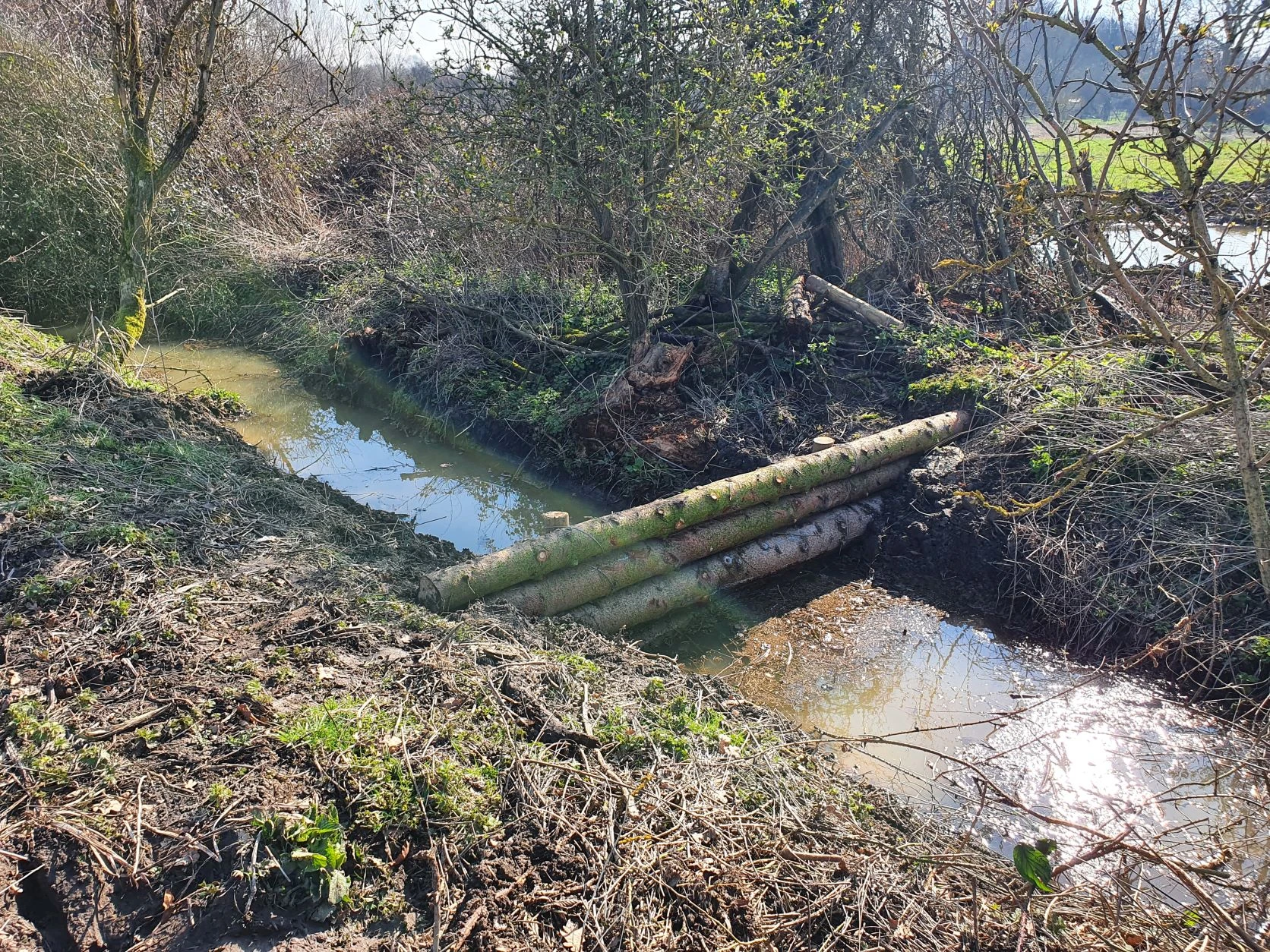
Aegaea are currently working with river trusts in England on their river restoration schemes, which involve the introduction of woody dams, gravel berms and re-meandering, to name but a few of the techniques being employed. These NFM projects are not only seeking to improve flood risk but also provide ecological benefits for fish passage and biodiversity net gain.
Natural Flood Management: A Case Study
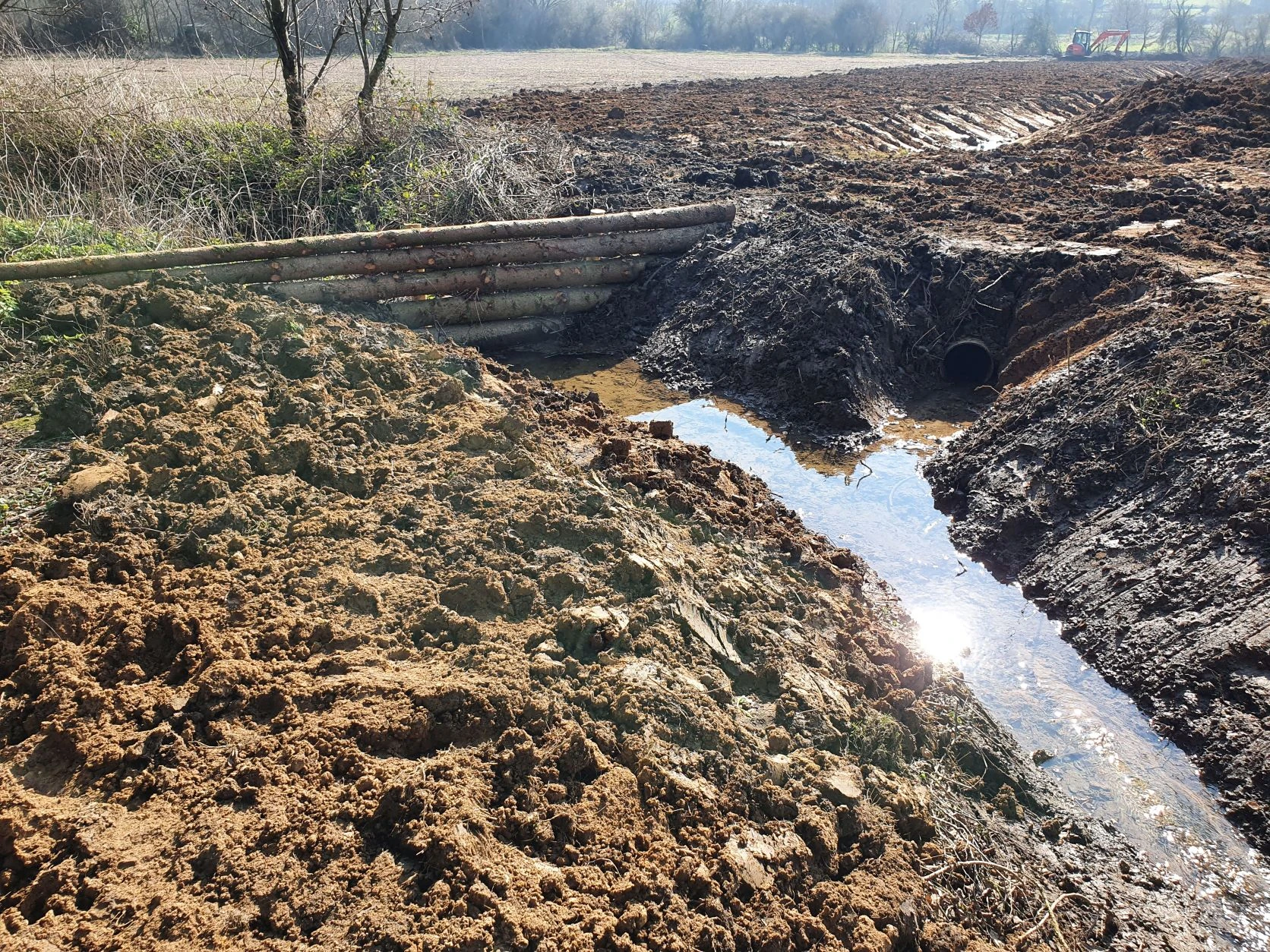
In 2022, Aegaea were commissioned to support with modelling works for a proposed watercourse diversion to restore natural wetland meadow habitat for the benefit of wading birds.
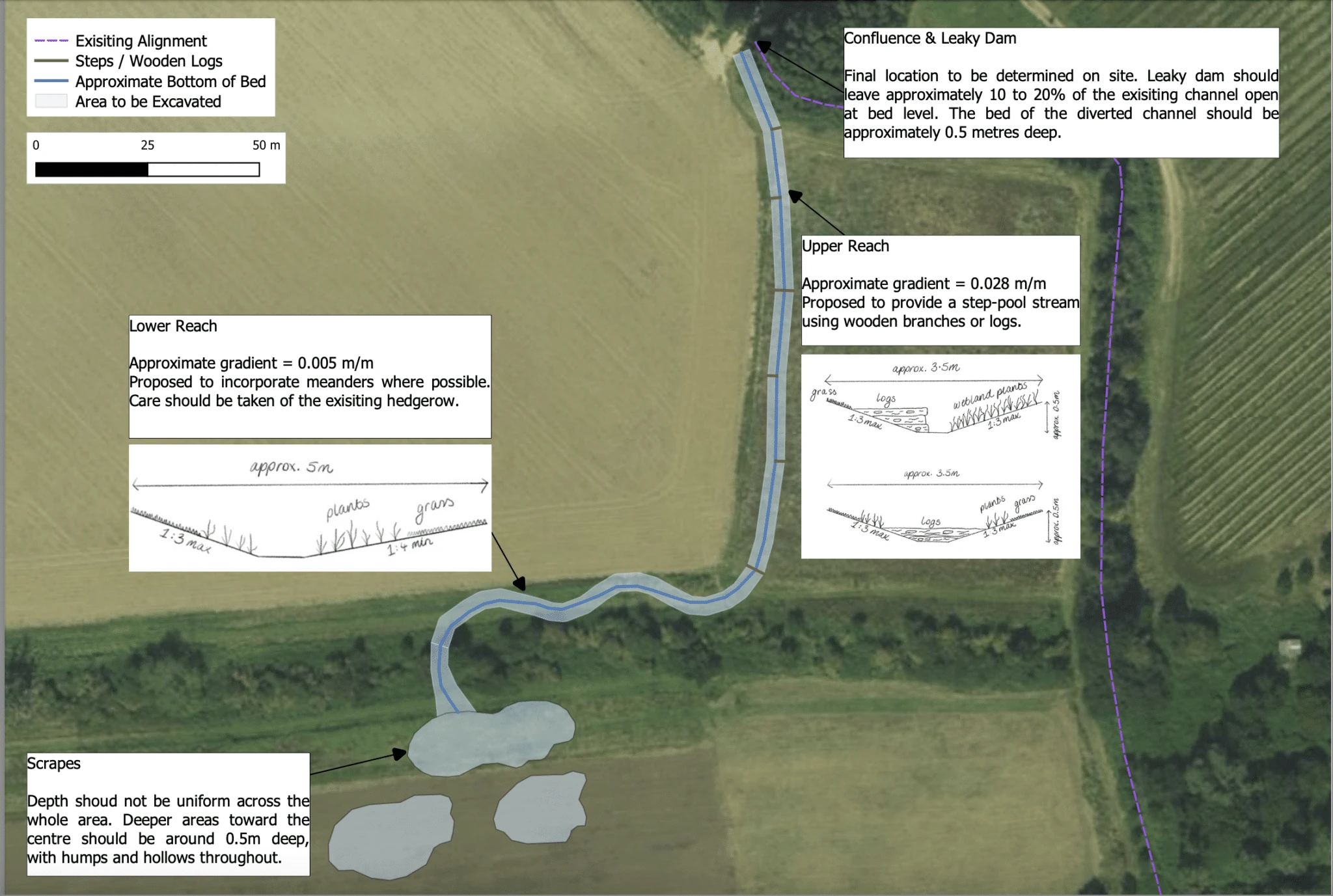
To achieve this, an ordinary watercourse needed to be diverted and enhanced, reconnecting wetland meadow to the watercourse. Aegaea visited the site and came up with conceptual plans for the scheme.
This included the use of a leaky dam to restrict water flowing downstream along the existing channel and to encourage mid to high flows through the diverted watercourse.
The alignment incorporated step-pools and meanders where appropriate to create a varied geomorphology along the length of the watercourse.
At the terminus of the watercourse diversion, within the meadow, scrapes were recommended to encourage water to pond and attract wildlife.
This work was consulted with the Environment Agency’s catchment manager, the Farmers Wildlife Advisory Group and Essex County Council and was unanimously approved for construction and implementation.
We are therefore keen to work with organisations such as river trusts to help them quantify the flood risk benefits of their schemes to obtain the funding.
Should you wish to discuss your NFM project and how we can support your funding application please do not hesitate to contact the team at the details below.